
IEC 60079-14
Annex C test equipment.
The Annex C cable pressure test is now normative in IEC 60079-14:2024. Where the Ex d selection flowchart calls for it, you need documented evidence for the specific cable construction you are using, and a catalogue reference on its own may not be enough.
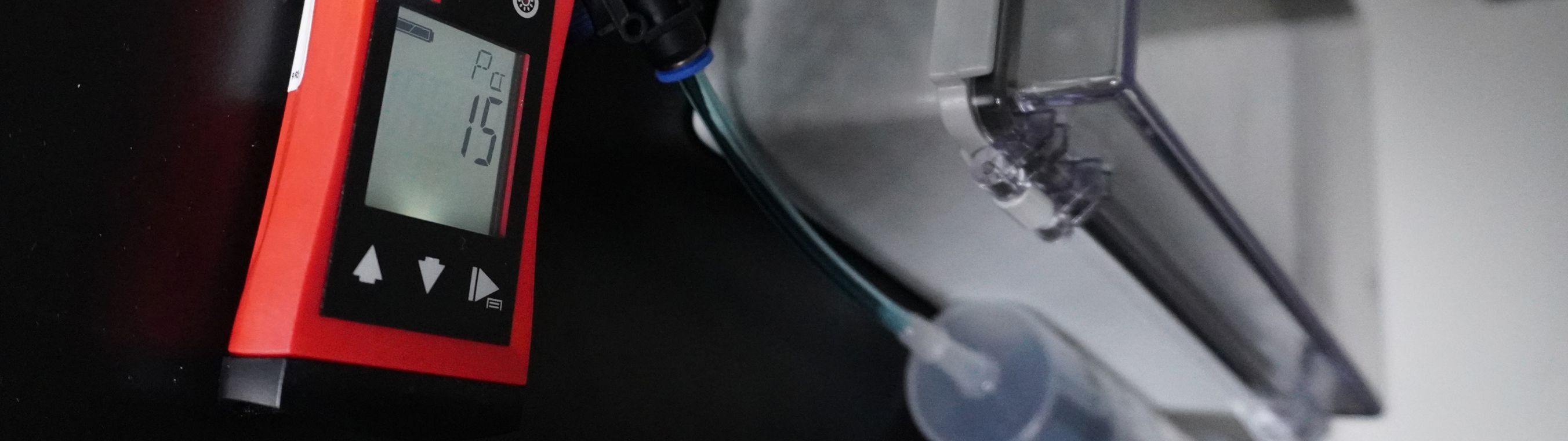
We build test equipment to the Annex C specification so you can generate that evidence in house, and we supply the procedure and records to go with it.
Three ways to get your evidence
Every dimension and tolerance in Annex C is prescribed, and our kit meets them. Buy it calibrated in house or with UKAS traceability, or have the test done for you by an accredited laboratory.
Annex C
Test Kit
Annex C
Test Kit
Accredited
Testing & Report
Prices exclude VAT and delivery. Lead times, multi-unit pricing and recalibration costs on request. Accredited testing is quoted per cable construction.
Four steps, and one pass criterion
A cable that fails does so because the gaps between its conductors are large enough to let pressure escape, the same gaps that would let a flame front travel along the core. That is why a catalogue description and a visual check are not evidence.
Training on cable and gland selectionWe helped write
the requirement
Jon Hichens represented the UK on the IEC TC 31 committee that developed Edition 6 of IEC 60079-14, where the selection flowchart and the Annex C requirements were finalised. Before insightEx he spent seven years in R&D and certification at a cable gland manufacturer, testing barrier and non-barrier glands.
So the kit is not a generic pressure rig with a label on it. It is built by people who have run this test for a living and know what an inspector asks next.
About usQuestions we are asked most
Still not covered? Send us the question. An engineer answers, not a chatbot.
What does the Annex C pressure test measure?
It measures whether a cable’s internal construction contains enough gaps between its conductors to allow a flame to propagate along the core. A 0.5 m cable sample is fitted to a 5,000 cm³ enclosure with minimal external compression, pressurised to 0.3 kPa and isolated. If the pressure does not drop by more than 50 per cent in 5 seconds, the cable passes. The test is scoped to inform the gland selection decision, and nothing else.
Does passing Annex C mean the cable is gas tight?
No, and the standard says so explicitly. “Gas tight” has no formal definition in IEC 60079-14 and is commercial shorthand. An Annex C pass means that tested cable construction, under those test conditions, meets the pressure retention criterion that allows an elastomeric-seal entry device under the Edition 6 flowchart. It certifies nothing beyond that.
When does the flowchart require Annex C evidence?
At specific decision points. On the IIA or IIB branch, where the cable meets the 0.5 m minimum length but the rated enclosure volume is 2,000 cm³ or greater, or cannot be confirmed. And on the IIC or IIB plus hydrogen branch with a cable of at least 3 m. In both cases, absent that evidence, a barrier-type device is required.
Can we run the test ourselves?
Yes. Annex C places no restriction on who conducts it, stating only that it may be done by the cable manufacturer or any other competent person. What it does require is competence: setting the apparatus up to specification, running the procedure correctly, and interpreting the result against the flowchart. Calibrated equipment and documented procedures are the practical bar, which is why our kit ships with both.
Do we need the UKAS calibrated version?
It depends what the record is for. If your Annex C results sit in your quality system as evidence an assessor will review, calibration traceable to national standards is what they will expect, so the UKAS version is the safer buy. If you are testing to inform your own design decisions, the non-UKAS kit does the same job for less. Where independent verification matters most, the accredited test and report is the strongest evidence of the three.
Is a cable manufacturer’s data enough?
It can be, if it is specific enough. The standard warns that a catalogue reference alone may not be adequate, because production variances change cable performance between batches. Evidence should identify the cable by manufacturer, type, size and conductor count, and rest on actual test data rather than a general product claim.
Tell us the cable, we will tell you the route.
Send us the cable specification and the enclosure volume and we will tell you whether Annex C applies at all, and whether testing in house or third-party testing makes more sense for you.
Ex training and compliance support for hazardous area equipment manufacturers.
Morpeth
NE61 6JN
Bellingham, Hexham
NE48 2AZ
