
How to certify your Ex Equipment.
Every market wants its own certificate, and every product has a choice of route. Working out which applies, in what order, and who can issue it is where most manufacturers lose months.
We hold contacts across five of the main routes to market and we know how each one assesses. Tell us where you are selling and we will tell you what you need, then introduce you to the right body.
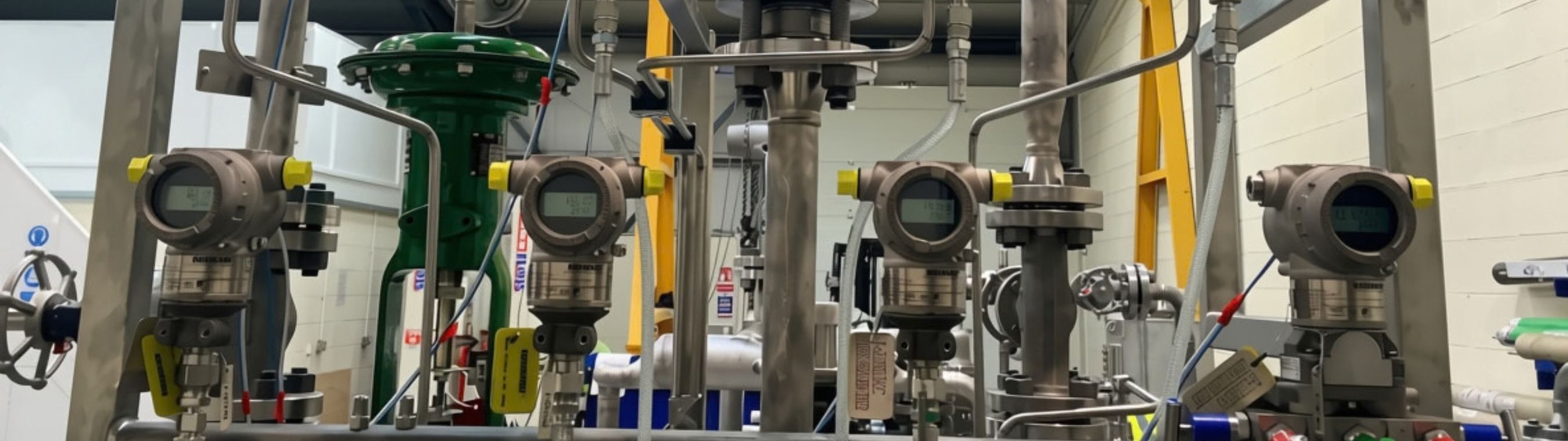
One unit, or every unit.
Under ATEX and IECEx, any equipment can be certified one unit at a time, or as a design you build again and again. We help you choose, then manage it through Element Materials Technology.
Unit verification
We manage the certification of your product under ATEX Module G or IECEx unit verification, with Element as the certification body. No QAN or QAR needed.
Type approval
The design is certified once, and a QAN or QAR against ISO/IEC 80079-34 covers production. Build as many as you like within the certificate.
Building control panels? See panel certification, step by step →
Based in the USA? Get your quote through our partner, Eutex International, in Houston.
Contact EutexOne market, one certificate
Certification follows the market, not the product. The same piece of equipment can need three or four certificates to be sold worldwide, each issued by a different kind of body. These are the five routes we can get you access to. There are others, and if you need one of those we will tell you where to go.
ATEX
The EU directive covering equipment intended for use in explosive atmospheres. Category 1 and 2 equipment needs a notified body, a type examination and a production quality assurance route, which is where your QAN comes in.
UKEX
The UK regime that replaced ATEX for the GB market after EU exit. Technically equivalent in requirements, but assessed by a UK approved body rather than an EU notified body, and marked differently.
IECEx
The international certification scheme run under the IEC. A single IECEx Certificate of Conformity is recognised across participating countries, which makes it the efficient route if you export widely.
NRTL
North America runs its own system. A Nationally Recognized Testing Laboratory must list or certify your product, and the classification system uses Classes and Divisions alongside the Zone system.
CCC
China Compulsory Certification, assessed against the GB 3836 standards. Required before Ex equipment can legally be sold or installed in mainland China, and it involves in-country factory inspection.
We know the routes, and the people
Certification is a relationship with a body that will assess you. Going in prepared, with the right introduction, is the difference between one submission and three.
Work out which routes you need
A short conversation about the markets you sell into, the equipment and the protection concepts involved. Most manufacturers need fewer certificates than they fear, and in a different order than they assumed.
Introduce you to the right body
We are not a certification body and we do not issue certificates. What we have is the contacts: notified bodies, UK approved bodies, IECEx certification bodies, NRTLs and CCC routes. We make the introduction and stay in the conversation.
Get the technical file in shape
Certification stalls on documentation more often than on the product. We review what you have against what the body will ask for, so the first submission is not the one that comes back.
The quality system
behind three of them
ATEX and UKEX call it a QAN, IECEx calls it a QAR, and all three assess the same quality system against ISO/IEC 80079-34. Build it once and it serves all three. NRTL and CCC run their own factory inspection regimes instead, so they are assessed separately.
QAN QAR implementationQuestions we are asked most
Still not covered? Send us the question. An engineer answers, not a chatbot.
What is the difference between ATEX and IECEx?
ATEX is EU law, so an ATEX certificate and CE marking are what let you place equipment on the EU market. IECEx is a voluntary international scheme, so an IECEx Certificate of Conformity is recognised by participating countries worldwide but is not itself an EU legal requirement. The technical standards behind both are the IEC 60079 series, which is why one set of testing usually supports both.
Do I need UKEX as well as ATEX?
If you sell into both Great Britain and the EU, yes. Since EU exit, GB requires UKCA marking assessed by a UK approved body, while the EU requires CE marking assessed by an EU notified body. The requirements are near-identical, so the work is largely duplicated administration rather than duplicated engineering. Northern Ireland follows different rules again.
Do I need DSEAR compliance as well as ATEX?
They apply to different people. ATEX and UKEX apply to you as a manufacturer placing equipment on the market. DSEAR applies to employers and site operators managing hazardous areas. If you manufacture Ex equipment and also run a plant with hazardous areas, both apply to you, but they are assessed separately.
Can one certificate cover several markets?
Not on its own, but an IECEx certificate does a lot of the heavy lifting. Because ATEX, UKEX and IECEx all test to the IEC 60079 standards, one set of testing can support all three submissions. NRTL and CCC work to their own standards and their own factory inspection, so they are separate pieces of work. Sequencing still matters, which is why it pays to decide the order before you start.
Do you issue certificates?
No. insightEx is not a certification body and does not issue certificates, and we would be careful of anyone who claimed to do both. We prepare you for certification, make the introduction to the right body, and support you through their assessment.
Where do I start?
With the market. Tell us where the product is going to be sold and we can tell you which schemes apply and in what order. If you have not yet got a quality system that would survive a QAN or QAR assessment, that is usually the first piece of work regardless of route.
Not sure where to start?
Tell us the product and the markets. We will map the routes you actually need, in the order that costs you least, and introduce you to the bodies that can certify them.
Ex training and compliance support for hazardous area equipment manufacturers.
Morpeth
NE61 6JN
Bellingham, Hexham
NE48 2AZ
